Introduction
The jurisprudence surrounding Indian matrimonial law has undergone a profound structural shift over the past two decades. In a landmark determination—Dr. Lokesh B.H. & Ors. v. State of Karnataka & Anr.—the Supreme Court of India addressed one of the most contentious intersections of social reality and criminal law: whether a woman in a live-in relationship can invoke criminal remedies under Section 498A of the Indian Penal Code (IPC) [now Section 85 of the Bharatiya Nyaya Sanhita, 2023 (BNS)].
By rejecting a rigid, hyper-technical construction of penal statutes in favor of a purposive, constitutional interpretation, the Supreme Court firmly established that the protective mantle of penal law against domestic cruelty extends to relationships “in the nature of marriage.”
The Constitutional and Statutory Tension
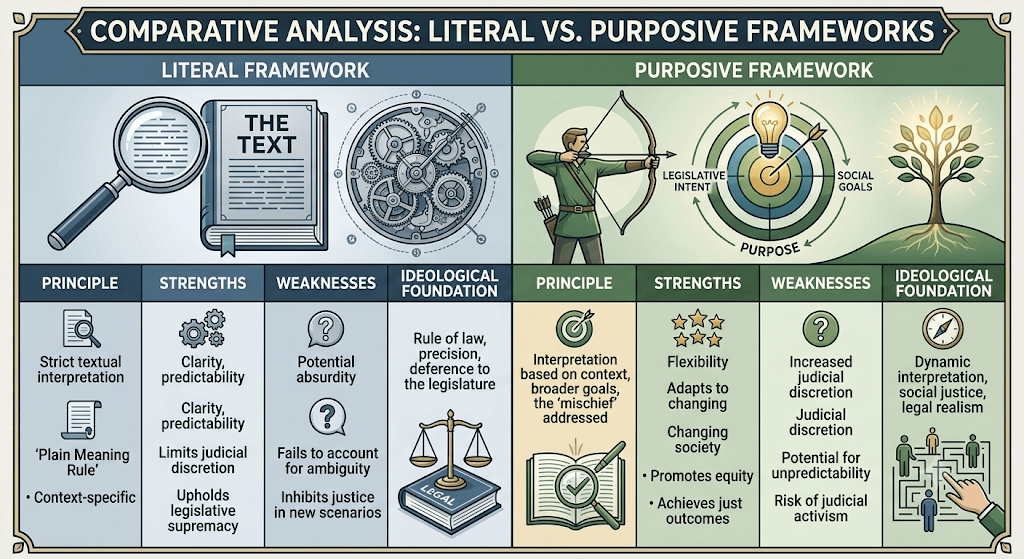
Historically, penal statutes have been subjected to strict interpretation, resting on the doctrine that criminal liability must be clearly defined by the literal text of the statute. Opposing arguments frequently posited that Section 498A IPC strictly necessitated a legally valid marriage as a sine qua non, confining the definition of “husband” to formal marital unions. Under this literal framework, live-in partners were relegated purely to civil remedies under the Protection of Women from Domestic Violence Act, 2005 (DV Act).
However, the Supreme Court recognized that permitting strict statutory construction to defeat the remedial purpose of a welfare-oriented penal provision creates a constitutional anomaly. Arbitrarily withholding criminal remedies from women facing severe domestic violence or cruelty simply because their relationship lacked formal ceremonial solemnization runs counter to equal protection under Article 14 and personal liberty under Article 21 of the Constitution of India.
Key Legal Pronouncements and Principles
The ruling sets forth several foundational principles that clarify the scope and application of domestic cruelty provisions:
1. Purposive Interpretation of “Husband”:
The term “husband” under Section 498A IPC / Section 85 BNS cannot be interpreted through an artificially restricted lens. Where a live-in relationship demonstrates long-term cohabitation, mutual obligations, and the social trappings of a marriage, the male partner falls within the statutory ambit of a “husband” for the limited purpose of penal liability against cruelty.
2. Non-Exclusivity of Civil and Criminal Remedies:
The existence of civil remedies under the DV Act does not divest an aggrieved woman of her right to file criminal proceedings under Section 498A IPC / Section 85 BNS. The remedies under civil welfare statutes and criminal codes are concurrent and complementary, designed to fulfill distinct statutory objectives.
3. Judicial Guardrails Against Misuse:
Recognizing the potential for over-implication and abuse of penal provisions, the Court highlighted the mandatory duty of lower courts to carefully scrutinize complaints. General, vague, or omnibus allegations against distant relatives of a live-in partner must be weeded out at the threshold to prevent unnecessary harassment and process abuse.
Practical Implications for Legal Practice
For legal practitioners, prosecutors, and judicial officers, this judgment alters both drafting strategies and evidentiary standards:
Establishing the “Trappings of Marriage”: To invoke criminal remedies in a live-in setup, the prosecution or complainant must establish key factual markers, such as shared household, long-term cohabitation, public holding out as a couple, and joint pooling of resources.
Filter for Prima Facie Allegations: Defense counsel representing live-in partners or their families can leverage the Court’s guardrails to quash frivolous complaints under Section 528 BNSS / Section 482 CrPC where specific acts of cruelty or long-term cohabitation are absent.
Co-existence of Petitions: Petitioners can concurrently maintain applications under Section 12 of the DV Act for monetary relief or protection orders alongside criminal proceedings under Section 85 BNS.
Conclusion
The ruling in Dr. Lokesh B.H. & Ors. v. State of Karnataka & Anr. marks a progressive step in Indian criminal jurisprudence. By recognizing that domestic cruelty is not rendered any less damaging by the absence of a marriage certificate, the Supreme Court has ensured that statutory protections remain responsive to evolving social dynamics while upholding robust judicial safeguards against procedural misuse.
Citation: 2026 INSC 784
Case Title: Dr. Lokesh B.H. & Ors. v. State of Karnataka & Anr.
Court: Supreme Court of India (Criminal Appellate Jurisdiction)
Date of Judgment/Impugned High Court Order: Arising out of Karnataka High Court judgment dated November 18, 2025 (in Criminal Petition Nos. 8134 of 2024 & 9412 of 2021)
Primary Subject: Applicability of Section 498A IPC (and corresponding provisions under BNS) to “live-in relationships” that qualify as a “relationship in the nature of marriage.

 DLC Legal News & Knowledge
Leave a comment